
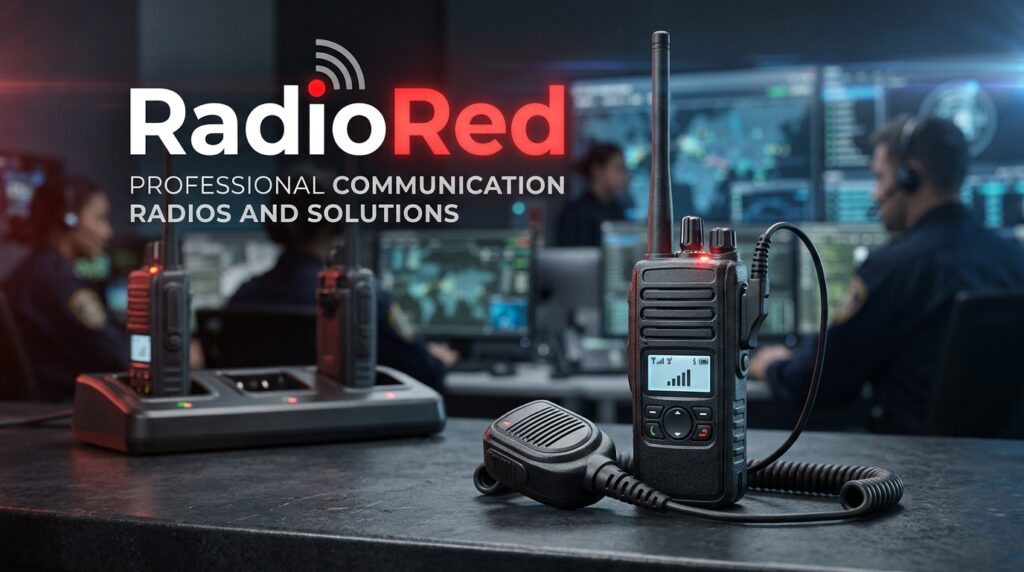

Reliable communication is essential for businesses, industrial facilities, transportation companies, security teams, and professionals working in demanding environments. Whether employees are coordinating daily operations, managing large facilities, or responding to unexpected situations, having dependable communication equipment can make a significant difference. This is where RadioRed becomes an important name in the professional radiocommunication market.
RadioRed is associated with communication radios and equipment designed to help individuals and organizations stay connected. Its product categories cover different communication requirements, including portable radios, mobile communication devices, marine radios, aerial equipment, repeaters, and accessories. These solutions support users who need dependable communication in workplaces where ordinary mobile phone conversations may not always be practical.
As technology continues to evolve, professional radio communication has become more versatile. Modern devices can offer digital audio, improved coverage options, location services, and compatibility with different communication systems. Understanding these technologies can help customers select suitable equipment for their personal or professional requirements.
What Is RadioRed?
RadioRed is a specialized name in the radiocommunication industry, associated with professional communication equipment and accessories. Its product range is designed to serve customers who require reliable communication tools for business operations, industrial activities, transportation, security, and other professional environments.
Unlike general electronics retailers, a specialized radiocommunication supplier focuses on equipment developed for specific communication requirements. Customers may need a compact handheld radio for a small security team, a vehicle-mounted communication device for transportation operations, or a more advanced system for coordinating employees across a large industrial facility.
RadioRed provides access to different categories of communication products, allowing customers to explore equipment based on their working environment and technical requirements.
The main objective of professional radiocommunication is simple: make communication faster, more organized, and more dependable when people need to exchange information.
Why Professional Radio Communication Still Matters
Smartphones have changed the way people communicate, but professional two-way radios continue to serve an important purpose. Many workplaces require immediate communication between multiple employees without the delays associated with traditional phone calls.
For example, a warehouse supervisor may need to contact several employees at once. A construction manager might need to coordinate workers operating in different sections of a project. Security personnel may need to share updates immediately while monitoring a large property.
In these situations, two-way radios offer a practical communication method.
Some important advantages include:
- Instant communication: Push-to-talk functionality allows users to communicate without dialing individual phone numbers.
- Team coordination: Employees can communicate through shared channels or groups.
- Operational efficiency: Quick updates help reduce unnecessary delays.
- Practical design: Professional radios are often designed for regular use in demanding environments.
- Specialized functionality: Certain devices support GPS, digital communication, emergency alerts, and additional features.
- Flexible applications: Different radio models can support transportation, construction, hospitality, security, and industrial operations.
These benefits explain why professional radio systems remain relevant even as digital communication platforms become more advanced.
Portable Two-Way Radios for Everyday Operations
Portable radios are among the most recognizable products in professional communication. Their compact design allows employees to carry communication equipment while moving around workplaces, outdoor locations, and large facilities.
RadioRed’s portable radio category provides options for customers looking for handheld communication devices.
These radios can be useful in several industries, including:
Security and Surveillance
Security professionals often work across different buildings, entrances, parking areas, and outdoor spaces. Portable two-way radios allow team members to share updates quickly and coordinate their responsibilities.
Construction and Engineering
Construction sites involve multiple teams performing different activities simultaneously. Workers may need to communicate with supervisors, equipment operators, and safety personnel.
Portable radios make these interactions more convenient, especially when employees are working in noisy environments.
Hospitality and Event Management
Hotels, restaurants, shopping centers, and event venues often depend on coordinated teams. Portable radios help employees communicate about customer requests, maintenance requirements, security matters, and operational changes.
Warehousing and Logistics
Warehouse employees regularly coordinate inventory movement, loading activities, deliveries, and equipment operations. Reliable communication can help improve workflow and reduce confusion.
Mobile Radios for Vehicles and Transportation
Mobile radios are designed for installation in vehicles and other suitable mobile environments. Unlike handheld devices, these systems are generally connected to vehicle power and use an appropriate external antenna.
They can be useful for businesses that depend on regular communication between drivers, dispatchers, supervisors, and operational teams.
Transportation companies, emergency support organizations, fleet operators, and field-service businesses may benefit from mobile radio technology.
Important considerations when choosing a mobile radio include:
- Transmission power and coverage requirements
- Compatibility with existing radio systems
- Available operating frequencies
- Audio quality
- Antenna requirements
- Installation arrangements
- Applicable communication regulations
Selecting the right equipment requires understanding the environment in which it will operate. A radio intended for a small delivery fleet may have different requirements from one used by a large transportation organization.
Marine Radios for Water-Based Communication
Communication becomes particularly important when people are working or traveling on the water. Marine radios help boat operators, fishing crews, maritime professionals, and recreational sailors maintain contact with other vessels and relevant communication services.
Marine communication equipment is designed around the environmental challenges associated with water-based activities.
Depending on the model, features may include:
- Marine VHF communication
- Water-resistant or waterproof construction
- Digital Selective Calling (DSC)
- GPS compatibility
- Emergency communication functions
- Clear displays and accessible controls
Marine radio selection should always reflect the type of vessel, operating area, and applicable maritime regulations.
For example, someone operating a small recreational boat may have different communication requirements from a commercial fishing operation or a professional maritime organization.
RadioRed’s marine communication category gives customers an opportunity to explore equipment intended for these specialized applications.
Aerial Radios and Aviation Communication
Aviation depends on clear and accurate communication. Pilots, aviation support personnel, and ground operations teams use specialized communication equipment to exchange important information.
Aerial radios are designed for aviation-related communication requirements and must operate within the appropriate frequency allocations and technical standards.
When selecting aviation communication equipment, customers should consider:
- Supported aviation frequency bands
- Audio clarity
- Compatibility with aircraft communication systems
- Installation requirements
- Power supply specifications
- Regulatory approval and certification
Aviation communication is a specialized field, so equipment should always be selected according to applicable aviation requirements.
Having suitable equipment helps support organized communication between relevant personnel and contributes to safer operational procedures.
Intrinsically Safe Radios for Hazardous Environments
Some industrial workplaces contain potentially explosive gases, vapors, dust, or other hazardous materials. In these environments, ordinary electronic devices may create additional safety risks.
Intrinsically safe radios are specially engineered and certified to reduce the risk of ignition under specified hazardous conditions.
Industries that may require these communication devices include:
- Oil and gas facilities
- Chemical manufacturing plants
- Mining operations
- Industrial processing facilities
- Certain pharmaceutical environments
- Hazardous material handling operations
The correct equipment must match the specific hazardous-area classification and applicable safety requirements.
Businesses should never assume that a radio is suitable for hazardous locations simply because it has a rugged exterior. Proper certification, approved accessories, and manufacturer specifications are essential.
By exploring specialized radio categories, customers can identify equipment designed for more demanding workplace conditions.
Radio Repeaters and Communication Coverage
Communication range is an important consideration when building a professional radio system. A standard radio may work effectively across a limited area, but larger facilities or geographically challenging locations can create coverage problems.
Radio repeaters help address these challenges.
A repeater receives a radio signal and retransmits it to extend communication coverage. Depending on the system design, repeaters can help connect users across larger buildings, industrial facilities, campuses, and other locations.
Common applications include:
Industrial facilities: Large manufacturing plants may require communication across several buildings and operational areas.
Commercial properties: Shopping centers, hotels, and large business complexes may benefit from improved radio coverage.
Transportation operations: Certain radio systems use repeaters to support communication across designated operating areas.
Remote workplaces: Repeater installations may help improve communication in locations where direct radio-to-radio connections are limited.
Before installing a repeater, organizations should evaluate frequency compatibility, antenna placement, infrastructure requirements, licensing, and the coverage area.
A properly designed communication system can make a significant difference in everyday operations.
Essential Radio Accessories and Equipment
A communication system involves more than the radio itself. Accessories can improve convenience, support longer operating periods, and help users adapt equipment to specific working conditions.
RadioRed’s product categories also include communication accessories and supporting equipment.
Some commonly used accessories include:
Batteries and Charging Stations
Reliable power is essential for employees who depend on radios throughout their working shifts. Additional batteries and compatible charging stations help organizations manage equipment availability.
Speaker Microphones
Speaker microphones allow users to operate radios more conveniently without constantly handling the main device. They can be especially helpful for security personnel and outdoor workers.
Communication Headsets
Headsets support hands-free communication and can make it easier to hear messages in noisy workplaces.
Antennas
Antennas are important components of radio communication systems. Selecting the correct antenna requires consideration of frequency, installation position, equipment compatibility, and operating conditions.
Radio Mounting Accessories
Vehicle installations and professional radio setups may require suitable mounting brackets, holders, cables, and other supporting components.
Choosing compatible accessories helps protect equipment and improve the overall user experience.
Digital vs. Analog Radios: Understanding the Difference
One important decision when purchasing communication equipment is choosing between analog and digital radio technology.
Both technologies have practical applications, but they offer different capabilities.
Analog radios transmit voice information using continuously varying signals. They remain useful for basic communication requirements and can work well in established analog systems.
Digital radios convert voice information into digital data before transmission. Depending on the technology and device, they can provide additional features such as improved audio processing, messaging, GPS functionality, and more efficient use of available communication resources.
Here is a simple comparison:
| Feature | Analog Radios | Digital Radios |
|---|---|---|
| Voice transmission | Analog signals | Digital data |
| Audio processing | Traditional | Digital processing |
| Additional features | Generally basic | Often more advanced |
| System compatibility | Analog systems | Compatible digital systems |
| Upgrade options | Depends on equipment | Depends on technology |
Neither option is automatically best for every organization. Businesses should consider existing equipment, coverage requirements, available frequencies, operating costs, and future expansion plans.
Push-to-Talk Over Cellular Technology
Traditional two-way radios generally communicate through radio frequencies. However, modern communication technology also includes Push-to-Talk over Cellular, commonly known as PoC.
PoC combines the convenience of push-to-talk communication with cellular or Wi-Fi connectivity.
Instead of relying exclusively on conventional radio coverage, PoC systems use supported network connections to facilitate communication between authorized users.
Depending on the platform and service, features may include:
- Individual voice communication
- Group communication
- GPS location services
- Fleet management
- Multimedia messaging
- Centralized user management
- Communication across wider geographic areas
PoC technology can be particularly useful for organizations with employees distributed across different cities or operating locations.
However, performance depends on network availability, service infrastructure, device compatibility, and the specific platform being used.
How Different Industries Can Benefit from RadioRed
Professional communication equipment serves a wide variety of industries. The right solution depends on the number of users, operating environment, communication distance, and level of reliability required.
Manufacturing and Industrial Businesses
Manufacturing facilities depend on coordination between production teams, maintenance departments, supervisors, and safety personnel.
Two-way radios can help employees report equipment problems, coordinate maintenance activities, and communicate operational updates.
Transportation and Fleet Management
Fleet operators need efficient communication between drivers and dispatch teams. Mobile radios and suitable communication systems can support daily transportation activities.
Retail and Shopping Centers
Retail businesses frequently coordinate customer assistance, inventory management, security, and maintenance.
Portable radios can help employees communicate without leaving their assigned areas.
Security Companies
Security organizations require quick communication between personnel working across different locations. Professional radios can support coordinated patrols and emergency responses.
Construction Companies
Construction projects involve changing work conditions and multiple teams. Communication equipment helps supervisors coordinate tasks and share important instructions.
Maritime Operations
Marine communication systems support vessel coordination, navigation-related communication, and emergency procedures.
These examples demonstrate why selecting appropriate communication equipment is important for organizations with different operational requirements.
How to Choose the Right Radio Equipment
Buying professional radio equipment should involve more than comparing prices or choosing the most popular model.
A suitable communication system should match the actual needs of its users.
Consider the following factors before making a purchase.
1. Identify Your Communication Requirements
Start by determining why you need a radio system. Is it for security, transportation, construction, warehouse management, marine operations, or another application?
The intended purpose will help narrow down suitable product categories.
2. Evaluate the Required Coverage
Consider the size of the operating area and any obstacles that may affect radio signals.
Buildings, hills, metal structures, and other environmental conditions can influence communication performance.
3. Check Battery Performance
Battery capacity and operating time are important for professionals who use radios throughout the day.
Consider charging time, replacement battery availability, and the expected duration of each working shift.
4. Consider Durability
Workplace conditions can vary significantly. Outdoor workers may need protection against moisture and dust, while industrial employees may require equipment with specific safety certifications.
5. Confirm Compatibility
Check whether the selected radio works with your existing equipment and communication infrastructure.
Frequency compatibility, programming requirements, and supported communication standards should be reviewed before purchasing.
6. Understand Licensing Requirements
Radio frequency regulations vary between countries and communication services.
Customers should confirm which frequencies are permitted and whether licensing or additional authorization is required.
7. Compare Long-Term Value
A lower initial price does not always mean a better investment.
Battery replacement, maintenance, accessories, compatibility, technical support, and future expansion should all be considered.
The Importance of Reliable Communication Equipment
Communication problems can create unnecessary delays and misunderstandings. In professional environments, these issues may affect productivity, customer service, and workplace coordination.
Reliable equipment helps teams exchange information when it matters.
However, technology alone cannot guarantee effective communication. Organizations should also establish clear communication procedures, train employees, maintain equipment, and regularly review their communication systems.
For example, employees should understand which channels to use, how to communicate emergency information, and how to report equipment problems.
Combining suitable radio equipment with proper workplace procedures creates a stronger communication environment.
Why Explore RadioRed?
RadioRed is relevant to customers looking for specialized radiocommunication equipment rather than general consumer electronics.
Its product categories cover several important communication requirements, from portable radios and vehicle-mounted units to marine equipment, aviation radios, repeaters, and accessories.
This range can make product research more convenient for businesses and individuals who need to compare different communication technologies.
Customers can benefit from considering several aspects when exploring the available selection:
- Product specifications and technical capabilities
- Manufacturer reputation
- Compatibility with existing equipment
- Intended working environment
- Available accessories
- Warranty and after-sales support
- Delivery and purchasing conditions
It is also important to review current product information before placing an order because availability, specifications, and commercial terms can change.
A careful purchasing decision helps ensure that the selected equipment supports both current communication needs and future operational requirements.
The Future of Professional Radiocommunication
Professional radio communication continues to develop as businesses adopt more connected technologies.
Digital radio systems, cellular connectivity, GPS integration, and centralized communication management are changing how organizations coordinate their employees.
One important development is the growing use of hybrid communication systems. These solutions can combine traditional radio infrastructure with internet-based communication, depending on the requirements of the organization.
Artificial intelligence and advanced software may also contribute to improved communication management through features such as automated reporting, location-based monitoring, and more efficient operational workflows.
Despite these developments, the basic purpose of professional radio communication remains unchanged: helping people exchange information quickly and reliably.
RadioRed’s focus on communication equipment reflects the continuing importance of specialized devices in industries where dependable communication is essential.
Conclusion
RadioRed represents an important area of the professional radiocommunication market, bringing together equipment categories designed for different users and operating environments. From portable two-way radios and mobile communication devices to marine equipment, aerial radios, repeaters, and accessories, professional radio technology continues to support businesses that depend on effective communication.
Choosing the right equipment requires careful consideration of coverage, compatibility, durability, battery performance, safety certifications, and regulatory requirements. Understanding these factors helps individuals and organizations make more informed purchasing decisions.

