
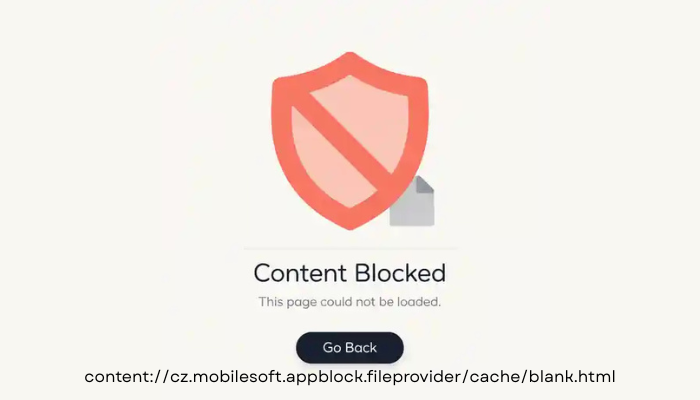

If you have ever opened your browser history or download list and spotted a long, confusing address beginning with “content://”, you are certainly not the first person to feel puzzled. The specific string content://cz.mobilesoft.appblock.fileprovider/cache/blank.html belongs to a popular Android application called AppBlock.
This address is not a website in the traditional sense. It is an internal Android content URI that allows one app to securely share a file with another app. In this case, AppBlock is providing a small HTML file called blank.html from its own protected cache folder. The file is usually loaded when the app successfully blocks a distracting website or when it needs to display a neutral page instead of the original content.
Discovering AppBlock and Its Purpose
Content://cz.mobilesoft.
The app goes beyond simple timers. Users can set up detailed schedules, create focus modes for work or study, block entire categories of apps, and even prevent themselves from uninstalling the blocker during moments of weakness. What makes AppBlock stand out is its thoughtful balance between strict control and user-friendly flexibility.
When you add a website to your block list, AppBlock works with your browser to intercept the request. Instead of letting the distracting page load, it redirects to the local blank.html file stored in its cache. This creates a seamless experience where the blocked site simply does not appear, helping your brain stay in flow state.
How the blank.html File Actually Works
The blank.html file is intentionally minimal. In its simplest form, it may display a short message reminding you why the site is blocked, show a motivational quote, or simply present a plain background that prevents the original page from loading.
Because the file lives inside content://cz.mobilesoft.
The cache folder means the file is not permanent. Android may clear it when storage is low or when the app is updated, but AppBlock simply recreates the file when needed. This design keeps the solution lightweight and efficient.
Why This URI Appears in Browser History and Downloads
Many users become concerned when they notice this address repeatedly appearing in Chrome’s history. The reason is straightforward. Every time AppBlock blocks a website, the browser records the URI that was actually loaded, which is the local content URI rather than the original website address.
It can also show up in the downloads section because some Android versions treat locally served files as temporary downloads. There is nothing malicious happening. It simply reflects normal operation of a website blocking tool doing exactly what you asked it to do.
If you have set up strict blocking rules or use AppBlock in “focus mode,” you will naturally see this URI more often. It is a sign that the app is working behind the scenes to protect your attention.
Is This URI Safe or Should You Be Worried?
The short answer is yes, it is completely safe. The package name cz.mobilesoft.appblock belongs to a legitimate, well-reviewed application available on the Google Play Store with millions of downloads.
Unlike malware that tries to hide behind similar-looking addresses, this URI is transparent about its origin. You can verify the app in your settings by searching for “AppBlock” or “MobileSoft.” The developer has been maintaining the app for years and regularly updates it for new Android versions.
That said, if you do not remember installing AppBlock and suddenly see this URI, it is worth checking your installed applications. Someone (perhaps a parent, partner, or even your employer in a managed device scenario) may have installed it to support your focus goals.
Getting the Most Out of AppBlock
Once you understand how the blank.html mechanism works, you can use AppBlock much more effectively. Start by creating different profiles for various times of day. Many users have a “Deep Work” profile that blocks news websites, social media, and YouTube, while a “Evening Wind Down” profile only blocks work-related tools.
Take advantage of the scheduling feature so the app works automatically. You can also use the “Block during phone usage” option, which activates blocking the moment it detects you are mindlessly scrolling.
For the blank page itself, explore the customization options. Some users prefer a completely blank screen while others add gentle reminders or even a breathing exercise widget. These small details make the blocking experience feel supportive rather than punitive.
Troubleshooting When the Blank Page Becomes a Nuisance
Occasionally the blank.html page may appear when you do not expect it. Common causes include outdated versions of AppBlock, conflicts with other productivity tools, or overly broad blocking rules that accidentally catch legitimate sites.
First, update the app from the Play Store. Newer versions often improve compatibility with the latest Chrome updates. You can also review your block list and make sure you have not added any important domains by mistake.
If the page continues appearing for sites you never blocked, try clearing AppBlock’s cache from Android settings. This forces the app to recreate its blank.html file cleanly. In rare cases, reinstalling the app while keeping your backup profile restores normal behavior.
Better Alternatives If AppBlock Does Not Fit Your Needs
While content://cz.mobilesoft.
On the more advanced side, Android’s built-in Digital Wellbeing tools have improved significantly. Combined with browser extensions or DNS-level blockers like Blokada, they can achieve similar results without installing another dedicated app.
The key is finding the tool that feels natural to you. The best blocking system is the one you will actually keep using for months and years.
Creating a Healthier Relationship With Your Phone
Understanding the content://cz.mobilesoft.appblock.fileprovider/cache/blank.html address is really about understanding your own attention. These slightly mysterious URIs are simply the visible traces of tools working quietly to protect something precious: your time and mental energy.
When used thoughtfully, AppBlock and similar applications do not feel like restrictions. They become gentle boundaries that help you live according to your values instead of reacting to every notification and headline.
Take a moment to review your current blocking rules. Ask yourself whether they still match your goals. Adjust them, experiment with different blank page messages, and remember that the goal is not perfection. The goal is progress and greater awareness of how you spend your limited attention each day.
Read also: Content://cz.mobilesoft.appblock.fileprovider/cache/blank.html