
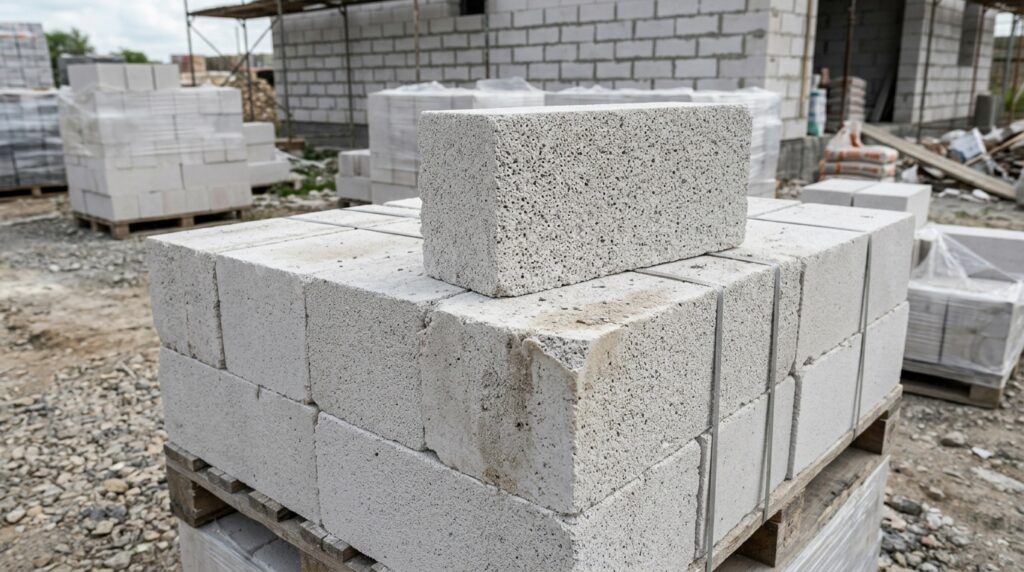

Beton Celular Autoclavizat: A Complete Guide to AAC Construction
Beton celular autoclavizat is a modern building material increasingly used in residential, commercial, and industrial construction. Commonly known as autoclaved aerated concrete (AAC) or BCA in Romania, it offers a combination of lightweight construction, thermal insulation, fire resistance, and practical installation advantages. These characteristics make it a popular alternative to traditional clay bricks and heavier concrete masonry products.
For homeowners, architects, builders, and property developers, understanding beton celular autoclavizat can help simplify material selection and improve the efficiency of a construction project. It is particularly useful when balancing structural requirements, energy efficiency, construction speed, and long-term maintenance.
This guide explores what AAC is, how it is manufactured, its major advantages and disadvantages, its applications, and how it compares with other masonry materials.
What Is Beton Celular Autoclavizat?
Beton celular autoclavizat, translated as autoclaved aerated concrete, is a lightweight masonry material manufactured from mineral-based ingredients and processed under controlled temperature and pressure. It is produced in the form of blocks, panels, and other construction elements used for walls and partitions.
The material has a distinctive cellular structure containing numerous tiny air pockets. These pores reduce its overall density, making it considerably lighter than conventional concrete and many traditional masonry products.
AAC is generally manufactured using quartz sand or another silica-rich material, cement, lime, water, gypsum, and a small quantity of an expansion agent. During production, the mixture expands and develops its porous structure. After preliminary curing and cutting, it undergoes autoclaving, a process involving high-pressure steam.
The resulting blocks combine relatively low weight with useful mechanical strength and thermal performance. Their uniform dimensions also make them convenient for modern masonry construction.
How Is Autoclaved Aerated Concrete Manufactured?
The manufacturing process of beton celular autoclavizat involves several carefully controlled stages. Each step influences the material’s strength, dimensions, density, and performance.
1. Raw Material Preparation
Manufacturers select and prepare the main ingredients, including silica-rich sand, lime, cement, gypsum, and water. The raw materials are measured according to a production formula designed to achieve the desired characteristics.
2. Mixing the Ingredients
The prepared materials are mixed to create a consistent slurry. A small quantity of an expansion agent, commonly aluminum powder or paste, is added. During the chemical reaction, gas forms tiny bubbles within the mixture, creating the cellular structure.
3. Expansion and Preliminary Curing
The mixture is poured into molds, where it expands and gradually becomes firm enough for further processing. The expansion creates the internal pores that give AAC its lightweight properties.
4. Cutting into Blocks
Once the material reaches the appropriate consistency, it is cut into precise dimensions using specialized equipment. Accurate cutting helps produce smooth surfaces and consistent block sizes.
5. Autoclaving
The cut blocks are placed in an autoclave and treated with high-pressure steam at elevated temperatures. This hydrothermal process develops the material’s strength and stability.
6. Quality Inspection and Packaging
After processing, the blocks are inspected for dimensional accuracy, visible defects, and quality requirements. Approved products are packaged and prepared for transportation to construction sites.
This controlled production process helps create masonry units with predictable characteristics and consistent performance.
Main Properties of Beton Celular Autoclavizat
AAC has several characteristics that make it suitable for different types of buildings.
Lightweight Structure
One of the most noticeable properties of autoclaved aerated concrete is its low density. The internal air pockets reduce the weight of the blocks compared with conventional concrete masonry.
Lightweight blocks can make handling, transportation, and installation easier. They may also reduce the dead load imposed on a building’s structural system, although the actual structural benefits must be evaluated by the project’s engineer.
Thermal Insulation
The porous structure of AAC contains air, which helps reduce heat transfer through the material. This can contribute to improved indoor comfort and lower heating or cooling demand when the wall assembly is appropriately designed.
The thermal performance depends on block density, thickness, moisture content, workmanship, and the overall wall configuration. In some climates, additional insulation may still be necessary to meet building energy requirements.
Fire Resistance
Autoclaved aerated concrete is generally classified as a noncombustible mineral-based building material. Its fire performance can make it suitable for walls designed to provide fire separation or resistance.
However, the fire rating of a complete wall depends on its thickness, construction details, joints, finishes, and tested or approved system specifications.
Sound Insulation
AAC masonry can help reduce noise transmission between rooms or from outside environments. Sound insulation depends on wall thickness, density, surface finishes, openings, and the presence of gaps or other weak points.
For applications requiring strong acoustic separation, the complete wall assembly should be evaluated rather than relying on the block material alone.
Easy Cutting and Shaping
AAC blocks are relatively easy to cut, shape, and adjust using suitable masonry tools. This allows builders to accommodate openings, corners, service routes, and project-specific details with less effort than some heavier masonry products.
Advantages of Beton Celular Autoclavizat
1. Improved Energy Efficiency
Thermal insulation is one of the most important reasons builders choose AAC. Its cellular structure helps limit heat transfer, supporting more comfortable indoor temperatures.
When used in a properly designed building envelope, AAC walls may reduce heating and cooling requirements. Energy savings depend on climate, wall thickness, insulation strategy, windows, airtightness, and the building’s mechanical systems.
2. Reduced Construction Weight
Because AAC blocks are lighter than many conventional masonry products, workers can handle them more easily. Their reduced weight can also help lower the overall masonry load on a structure.
This can be especially useful for projects involving extensions, renovations, or buildings where reducing additional weight is an important consideration.
3. Faster Masonry Work
AAC blocks are often manufactured with accurate dimensions and relatively large formats. Their size and manageable weight can help construction teams build walls more quickly.
When the blocks are compatible with thin-bed masonry adhesive, joints can be thinner than traditional mortar joints. This may reduce material consumption and improve the uniformity of the wall.
4. Fire Safety Benefits
AAC is a mineral-based material that does not readily burn. It can be used in construction systems where fire performance is an important design requirement.
Its fire resistance makes it attractive for residential buildings, commercial facilities, and certain industrial applications.
5. Lower Material Waste
Precise block dimensions and the ability to cut blocks to fit specific locations can help reduce unnecessary material waste. Offcuts may also be used for smaller masonry sections when appropriate.
Efficient planning and careful handling remain important for minimizing waste on site.
6. Practical Renovation Applications
The lightweight characteristics of AAC make it a potential option for renovation, interior partitions, and certain building extensions. However, any new masonry added to an existing structure must be assessed for compatibility, load capacity, and building-code requirements.
Disadvantages and Limitations of AAC Blocks
Despite its advantages, beton celular autoclavizat is not suitable for every construction situation.
Lower Strength Than Some Dense Masonry Products
AAC blocks may have lower compressive strength than certain dense concrete blocks or solid masonry products. Different grades are available, but the correct grade must be selected according to the design requirements.
Load-bearing use should never be assumed simply because a block is marketed as a construction product.
Moisture Considerations
AAC is porous and can absorb moisture. Appropriate protection against rain, ground moisture, and water exposure is essential.
Exterior walls typically require suitable render, cladding, waterproofing details, or other protective systems depending on the climate and design.
Fixing Heavy Objects
The porous structure may require special anchors or fixing systems for heavy cabinets, equipment, shelves, and other loads.
Ordinary fasteners may not perform adequately in every application. The fixing method should match the block type, load, and manufacturer’s recommendations.
Potential for Damage During Handling
AAC blocks are easier to cut, but their edges and corners may be vulnerable to damage if handled carelessly. Proper transportation, storage, and installation help maintain block quality.
Material and Installation Costs
The purchase price of AAC may differ from traditional bricks depending on the manufacturer, block dimensions, location, and availability.
A fair comparison should consider the complete wall system, including adhesive, labor, insulation, finishes, transportation, waste, and any structural requirements.
Common Applications of Beton Celular Autoclavizat
AAC is used across several types of construction projects.
Exterior Walls
AAC blocks can be used for exterior wall construction in buildings designed to meet the appropriate structural and thermal requirements. Their insulation properties may help improve building-envelope performance.
The selected wall thickness and any additional insulation should be based on climate conditions and applicable regulations.
Interior Partition Walls
Lightweight AAC blocks are frequently used for interior walls separating bedrooms, living areas, offices, corridors, and other spaces.
They can provide a solid wall surface for plastering and finishing while helping reduce the weight of internal masonry.
Residential Buildings
AAC is commonly considered for houses, apartment buildings, and other residential projects. Builders may use it to create exterior walls, internal partitions, or other masonry elements specified in the design.
Commercial and Industrial Buildings
The material can also be used in offices, retail spaces, warehouses, and industrial facilities. The application depends on the structural system, fire requirements, acoustic needs, and the project’s technical specifications.
Renovations and Extensions
For certain renovation projects, lightweight masonry may help create new partitions or extend existing spaces. A structural assessment is particularly important when adding walls to an existing building.
How to Install AAC Blocks Properly
Correct installation is essential for achieving the intended performance of beton celular autoclavizat.
Prepare the Foundation or Supporting Surface
Before masonry begins, the supporting surface should be clean, level, and suitable for the wall. The first course often requires special attention because it establishes the alignment and level of the remaining wall.
Use the Appropriate Mortar or Adhesive
AAC masonry may use a compatible thin-bed adhesive or another specified mortar system. The product should be selected according to block specifications and manufacturer instructions.
Maintain Alignment and Level
Each block should be positioned carefully, checking alignment, level, and verticality. Consistent joints help create a uniform wall and reduce the need for corrective work.
Plan Openings and Services
Door openings, windows, electrical routes, plumbing, and other services should be planned before installation. Cutting should be performed using suitable tools while avoiding unnecessary damage.
Protect the Finished Wall
Once masonry is complete, the wall should receive suitable finishing and protection. Exterior walls require particular attention to water resistance, weather exposure, and movement details.
Beton Celular Autoclavizat vs. Traditional Bricks
Choosing between AAC and traditional clay bricks depends on the priorities of the project.
AAC blocks are generally lighter, easier to cut, and provide useful thermal insulation. Their larger size can help reduce the number of masonry units required and potentially speed up construction.
Traditional bricks, on the other hand, may offer different strength characteristics, familiarity among local builders, and availability in certain markets. Their performance varies considerably according to the type of brick and the wall system.
Neither material is automatically the best choice for every project. Builders should compare structural performance, thermal efficiency, acoustic requirements, construction costs, labor availability, and finishing requirements.
The most appropriate solution is the one that satisfies the building design and local construction standards while providing the best overall value.
How Much Does Beton Celular Autoclavizat Cost?
The price of AAC blocks depends on several factors, including the manufacturer, block thickness, density, product grade, delivery distance, and regional market conditions.
Buyers should compare prices using the same measurement unit, such as price per cubic meter or price per block. They should also calculate the quantity required for the wall area and account for openings, cutting, and reasonable waste.
The total construction cost is more important than the block price alone. Thin-bed adhesive, labor, transportation, finishing materials, wall insulation, and accessories can influence the final budget.
For an accurate estimate, request a current quotation from local suppliers and compare the complete masonry system rather than purchasing based only on the lowest advertised price.
Frequently Asked Questions
What is beton celular autoclavizat?
Beton celular autoclavizat is autoclaved aerated concrete, a lightweight masonry material with a porous structure. It is manufactured from mineral ingredients and hardened using high-pressure steam.
Is AAC good for building houses?
AAC can be suitable for residential construction when the block type, wall design, structural system, and installation details meet the project’s engineering requirements.
Does AAC provide good thermal insulation?
AAC generally offers useful thermal insulation because its porous structure contains air. The actual performance depends on density, wall thickness, moisture, and the complete building-envelope design.
Is AAC better than traditional bricks?
AAC may offer advantages in weight, insulation, cutting, and construction speed. Traditional bricks may be preferred in other situations based on strength, availability, familiarity, or specific design needs. The best choice depends on the project.
Can AAC blocks be used for exterior walls?
Yes, AAC blocks can be used for exterior walls in suitable building systems. Proper wall thickness, weather protection, insulation strategy, and structural design are essential.
Are AAC blocks fire-resistant?
AAC is generally a noncombustible mineral-based material. The fire resistance of a wall depends on its thickness, joints, finishes, and complete construction system.
Is AAC expensive?
AAC prices vary by supplier, size, grade, and region. Although the initial material price may differ from traditional masonry, the overall project cost should include labor, adhesive, transportation, insulation, and finishing.
Conclusion
Beton celular autoclavizat is a versatile construction material that combines lightweight properties, thermal insulation, fire resistance, and practical installation benefits. Its cellular structure makes it useful for exterior walls, interior partitions, residential buildings, commercial facilities, and selected renovation projects.
Although AAC offers several advantages, it also requires appropriate structural planning, moisture protection, compatible fixings, and careful installation. Comparing complete wall systems rather than individual block prices is the best way to evaluate its suitability.
For builders, homeowners, architects, and property developers, beton celular autoclavizat can be a valuable solution when its technical properties match the requirements of the project. With proper design and workmanship, it can contribute to efficient construction, comfortable interiors, and durable buildings.