
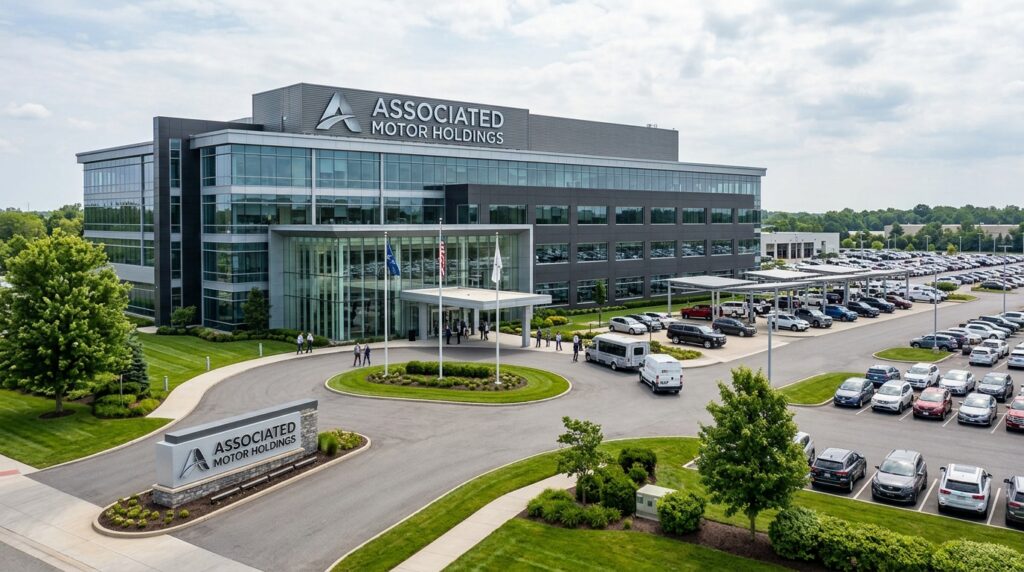

Associated Motor Holdings is a name associated with South Africa’s automotive industry, particularly vehicle distribution, automotive retail, and the wider motor trade. The company has an interesting business history that reflects the development of the automotive market in Southern Africa, where vehicle manufacturers, distributors, dealerships, suppliers, and service providers work together to meet changing customer needs.
For people researching Associated Motor Holdings, understanding the company requires looking beyond its name. Its background is connected to the distribution of passenger vehicles, commercial vehicles, motorcycles, automotive parts, and related products. It also has a place in the corporate history of Imperial Holdings, one of South Africa’s established business groups.
The company is particularly interesting because it represents an important part of the automotive distribution model. Rather than focusing exclusively on manufacturing vehicles, its business activities involved connecting international automotive brands with local markets through distribution networks, dealerships, parts supply, and after-sales services.
This article explores Associated Motor Holdings, its history, business activities, automotive industry involvement, corporate development, and broader significance in the South African motor industry.
1. What Is Associated Motor Holdings?
Associated Motor Holdings (Pty) Ltd, commonly abbreviated as AMH, was a South African automotive distribution company involved in importing and distributing motor vehicles and related products.
The company operated within the broader automotive sector and formed part of the business activities associated with Imperial Holdings. Its operations covered several areas of the motor industry, including passenger vehicle distribution, commercial vehicle distribution, motorcycles, automotive products, and industrial equipment.
According to historical corporate reporting, Associated Motor Holdings distributed passenger vehicles as well as light and heavy commercial vehicles throughout Southern Africa. Its activities also included automotive maintenance and warranty products.
This broad business model allowed the company to participate in several areas of the automotive value chain.
Instead of depending on a single vehicle category, AMH operated across different market segments. This approach helped create opportunities in both personal transportation and business-related vehicle markets.
The company’s historical activities can be understood through several important areas:
- Passenger vehicle imports and distribution
- Light commercial vehicle distribution
- Heavy commercial vehicle distribution
- Motorcycle distribution
- Automotive parts and accessories
- Vehicle maintenance and warranty products
- Industrial equipment distribution
These activities demonstrate why Associated Motor Holdings became a recognizable name in South Africa’s automotive business environment.
2. The History of Associated Motor Holdings
The history of Associated Motor Holdings is closely connected to the development of South Africa’s automotive distribution industry and the expansion of large corporate groups into vehicle-related businesses.
During its years of operation, the company developed a business structure focused on importing, distributing, and supporting different vehicle brands. This model was important in a market where international manufacturers frequently relied on established local partners to manage distribution and customer support.
Associated Motor Holdings became part of Imperial Holdings, a diversified South African business group with interests in mobility and other commercial activities.
Imperial’s investment provided AMH with access to a larger corporate structure, financial resources, management expertise, and opportunities to expand its automotive operations.
In 2016, Imperial announced an agreement to acquire the remaining 10% minority interest in the AMH Group. Before that transaction, Imperial held a 90% interest. The acquisition was intended to make the AMH Group a wholly owned subsidiary.
This development represented an important stage in the company’s corporate history because it brought the remaining ownership under Imperial’s control.
The AMH Group included several businesses and related operations, reflecting its broader regional automotive interests.
3. Associated Motor Holdings and Imperial Holdings
Understanding the relationship between Associated Motor Holdings and Imperial Holdings is essential when researching the company’s corporate background.
Imperial Holdings was a major South African business group with operations across mobility, logistics, and other commercial sectors. Its automotive interests formed an important part of its business portfolio.
Associated Motor Holdings operated as one of its significant automotive subsidiaries.
The relationship offered several potential business advantages, including:
- Access to established corporate management structures
- Financial and operational resources
- Opportunities to develop automotive distribution networks
- Connections with international vehicle manufacturers
- Greater capacity to expand into regional markets
- Experience in managing complex supply chains
The relationship also demonstrated how large diversified companies can build specialized divisions around particular industries.
For Imperial, the automotive sector provided opportunities across vehicle imports, distribution, dealership operations, and related services. For Associated Motor Holdings, being part of a larger group offered a foundation for business development and regional expansion.
It is important to distinguish the historical AMH business from the wider corporate group that evolved from Imperial’s mobility operations. The names and ownership structures associated with these businesses changed over time, so older company records should be interpreted in their historical context.
4. Vehicle Distribution and Automotive Operations
Vehicle distribution was one of the central activities associated with Associated Motor Holdings.
Automotive distribution involves much more than bringing vehicles into a country. It requires coordination between manufacturers, importers, dealers, logistics providers, parts suppliers, service centres, and customers.
A distributor typically manages several important responsibilities.
Passenger Vehicle Distribution
Passenger vehicles serve individuals, families, and businesses that require convenient and reliable transportation.
The distribution of passenger cars involves understanding customer preferences, managing vehicle supply, coordinating dealership networks, and supporting customers after a purchase.
Associated Motor Holdings participated in this market through its historical distribution activities involving different automotive brands.
Commercial Vehicle Distribution
Commercial vehicles are essential for businesses that depend on transportation, deliveries, construction, and other operational activities.
Light commercial vehicles can support small businesses, service providers, and delivery operations. Heavy commercial vehicles are particularly important for freight transportation, industrial activities, and large-scale logistics.
Distribution in this category requires a strong understanding of business customer requirements, vehicle specifications, parts availability, and maintenance support.
Motorcycle Distribution
Motorcycles represent another important segment of the transportation industry.
They can provide affordable mobility, convenient urban transportation, and practical solutions for certain commercial applications.
Associated Motor Holdings’ historical business activities also included motorcycle distribution, giving it exposure to another part of the wider automotive market.
Automotive Parts and Accessories
The automotive aftermarket is an important component of vehicle ownership.
Customers need replacement parts, accessories, maintenance products, and technical support throughout a vehicle’s operating life.
A distributor that supports these requirements can contribute to vehicle reliability, customer satisfaction, and the long-term performance of dealership networks.
5. Automotive Brands and Market Representation
One of the notable characteristics of Associated Motor Holdings was its involvement with multiple vehicle brands.
Historical company information identifies brands such as Hyundai and Kia among the vehicles imported into South Africa through its operations. Other historical company profiles also associate its distribution activities with brands including Daihatsu, Tata, SsangYong, and Renault.
The specific brand portfolio changed over time, so these names should be understood as historical associations rather than a guarantee of current distribution arrangements.
Working with multiple automotive manufacturers can offer several advantages.
First, it allows a distributor to serve different customer groups. Some buyers prioritize affordability, while others are more interested in vehicle technology, comfort, performance, or commercial practicality.
Second, a diversified portfolio can reduce dependence on one particular vehicle category.
Third, it creates opportunities to serve customers with different budgets and transportation requirements.
The ability to manage multiple brands also requires effective coordination. Each manufacturer may have different technical standards, marketing requirements, warranty policies, and distribution expectations.
A successful automotive distributor must therefore maintain consistent operational standards while respecting the individual identity of each brand.
6. Associated Motor Holdings and the Southern African Automotive Market
Southern Africa has a diverse automotive market shaped by economic development, urbanization, infrastructure, international trade, and changing transportation requirements.
South Africa has traditionally played an important role in the regional automotive industry because of its established vehicle manufacturing, importing, distribution, and retail networks.
Companies involved in automotive distribution help connect international manufacturers with customers across different markets.
Associated Motor Holdings participated in this environment through its regional distribution activities.
The company’s involvement in Southern Africa reflected the importance of regional expansion for automotive businesses.
A distributor operating across multiple countries must understand several factors:
- Local vehicle regulations
- Import duties and customs procedures
- Currency movements
- Road and infrastructure conditions
- Customer purchasing power
- Availability of replacement parts
- Regional dealership requirements
- Vehicle maintenance expectations
These considerations influence how automotive companies select markets, manage inventory, and establish commercial relationships.
Regional distribution can also create opportunities for manufacturers that want to reach customers beyond their primary domestic markets.
For customers, established distribution networks can improve access to vehicles, technical assistance, and genuine replacement parts.
7. Expansion Beyond Traditional Vehicle Distribution
Associated Motor Holdings’ corporate history also demonstrates how automotive businesses can diversify into related industries.
A particularly interesting example is the 2010 acquisition involving Goscor Cleaning Equipment and Uvundlu Investments.
South Africa’s Competition Tribunal approved Associated Motor Holdings’ acquisition of a 65% shareholding in both businesses.
The transaction was significant because it represented an expansion beyond conventional vehicle distribution into industrial equipment and related markets.
Goscor Cleaning Equipment was involved in distributing industrial cleaning products and equipment. Uvundlu Investments had interests in industrial products, including welding and cutting equipment, forklifts, warehouse equipment, engines, compressors, and pumps.
This diversification reflected a broader business strategy.
Companies with experience in importing, distributing, and supporting technical products may find opportunities in adjacent industries. These markets can share operational requirements such as international sourcing, inventory management, dealer relationships, technical servicing, and customer support.
However, diversification also requires specialist knowledge. Industrial equipment customers often have different requirements from private vehicle buyers, particularly regarding equipment specifications, maintenance schedules, safety, and business productivity.
The transaction therefore provides an interesting example of how a motor industry company explored opportunities beyond the traditional automotive sector.
8. The Importance of Dealership Networks
Dealership networks play a central role in automotive distribution.
Even when a manufacturer produces a high-quality vehicle, customers need convenient ways to discover, purchase, finance, maintain, and repair it.
Dealerships provide the physical connection between manufacturers and vehicle buyers.
Their responsibilities commonly include:
- Displaying new and used vehicles
- Providing product information
- Organizing test drives
- Supporting vehicle financing applications
- Managing vehicle deliveries
- Arranging maintenance and servicing
- Supplying replacement parts
- Handling warranty-related matters
For distributors such as Associated Motor Holdings, dealership relationships were an important part of the wider business model.
A well-organized dealership network can improve brand visibility and make it easier for customers to access products and services.
It can also provide manufacturers with valuable information about customer preferences, market demand, and competing products.
Dealerships are particularly important in markets where customers value face-to-face assistance and ongoing technical support.
9. After-Sales Services and Customer Satisfaction
The relationship between an automotive business and its customers does not end when a vehicle is purchased.
After-sales services are essential for maintaining customer confidence and supporting the long-term value of a vehicle.
These services can include routine maintenance, mechanical repairs, warranty support, replacement parts, and technical assistance.
Associated Motor Holdings’ historical business activities included maintenance and warranty products, demonstrating its involvement in services beyond the initial vehicle sale.
After-sales support matters for several reasons.
Vehicle Reliability
Regular maintenance helps vehicles operate efficiently and can identify developing problems before they become more serious.
Customer Confidence
Customers are more likely to trust an automotive brand when they know that support is available after purchasing a vehicle.
Parts Availability
Access to suitable replacement parts can reduce repair delays and help keep vehicles operational.
Long-Term Brand Reputation
Positive service experiences can encourage repeat purchases and customer recommendations.
For commercial vehicle customers, dependable after-sales services are especially important because unexpected vehicle downtime can affect business operations and profitability.
10. Corporate Ownership Changes and Business Development
Corporate ownership changes can significantly influence the direction of an automotive company.
They can affect investment decisions, management structures, expansion plans, operational priorities, and relationships with other businesses.
Associated Motor Holdings experienced important ownership developments during its relationship with Imperial Holdings.
As previously discussed, Imperial acquired the remaining minority interest in the AMH Group in 2016, moving toward full ownership.
The broader corporate structure subsequently evolved as Imperial’s mobility businesses underwent further development.
In 2018, Imperial’s mobility operations became associated with the separately listed Motus Holdings following the restructuring of Imperial’s business.
This wider corporate history is relevant when researching older references to Associated Motor Holdings because historical company names may appear in legal records, financial statements, employment documents, and corporate announcements.
For accurate research, it is important to distinguish between:
- Associated Motor Holdings as a historical legal entity
- The wider AMH Group
- Imperial Holdings as its former parent company
- Later corporate structures associated with Imperial’s mobility operations
These entities are connected through corporate history, but they should not automatically be treated as interchangeable names.
11. The Role of Automotive Distributors in the Modern Economy
Automotive distributors contribute to economic activity in several ways.
Their work supports international trade, vehicle retail, logistics, technical services, employment, and the automotive aftermarket.
Supporting International Trade
Vehicle distribution connects overseas manufacturers with local customers. It involves international procurement, shipping, customs processes, and domestic logistics.
Creating Employment Opportunities
Automotive distribution can support employment in dealerships, warehousing, sales, administration, vehicle maintenance, parts management, and customer service.
Supporting Small and Large Businesses
Commercial vehicles and industrial equipment help businesses transport products, manage operations, and improve productivity.
Developing Technical Skills
The automotive industry requires trained technicians, service advisers, parts specialists, mechanics, and other professionals with practical technical knowledge.
Contributing to Regional Commerce
Vehicle distribution networks can support trade between neighboring countries and improve access to transportation products.
These contributions explain why automotive distributors remain important participants in developing and established economies.
12. Challenges Facing Automotive Distribution Companies
Although automotive distribution creates significant commercial opportunities, the industry also faces several challenges.
The business environment is influenced by economic conditions, international supply chains, customer expectations, technological development, and regulatory requirements.
Changing Economic Conditions
Economic uncertainty can affect consumer confidence and vehicle purchasing decisions.
When household budgets become tighter, customers may delay vehicle purchases or choose more affordable alternatives.
Businesses may also reconsider fleet expansion when operating costs increase.
Exchange Rate Fluctuations
Companies that import vehicles and automotive components can be affected by currency movements.
Changes in exchange rates may increase procurement costs and influence retail pricing.
Supply Chain Disruptions
International shipping delays, manufacturing interruptions, and shortages of vehicle components can affect stock availability.
Effective supply chain management is therefore essential.
Competition
Automotive distributors compete with other established brands, independent importers, used vehicle dealers, and alternative transportation solutions.
Companies need to maintain competitive pricing, reliable service, and attractive product portfolios.
Technological Changes
The automotive industry is evolving through electric vehicles, advanced driver-assistance systems, connected technology, and increasingly sophisticated vehicle software.
Distributors and dealerships must develop the technical knowledge needed to support these developments.
Regulatory Requirements
Vehicle importation and distribution involve safety standards, environmental requirements, consumer protection rules, and other regulatory obligations.
Businesses must remain informed about applicable legislation and compliance requirements.
13. The Future of the Automotive Distribution Industry
The future of automotive distribution will be influenced by technological innovation, environmental considerations, digital commerce, and changing customer preferences.
Electric vehicles are becoming an increasingly important part of the global automotive conversation. Although adoption rates differ between countries, manufacturers and distributors are preparing for transportation systems that include more electrified vehicles.
Digital platforms are also changing how customers research and purchase vehicles.
Consumers can compare vehicle specifications, explore financing options, read reviews, and contact dealerships online before visiting a showroom.
This development encourages automotive companies to combine traditional customer service with convenient digital experiences.
Another important trend is the growing importance of data.
Businesses can use customer information, inventory systems, and sales analysis to improve forecasting, understand demand, and manage operations more effectively.
After-sales services will also remain important. As vehicles become more technologically advanced, dealerships and service centres will need better diagnostic tools and specialized technical training.
The historical development of Associated Motor Holdings offers a useful perspective on how automotive distribution businesses adapt to changing market conditions.
Its experience illustrates the importance of diversification, manufacturer relationships, distribution networks, and long-term customer support.
14. Why People Search for Associated Motor Holdings
There are several reasons why people may search for Associated Motor Holdings online.
Some researchers want to understand the company’s history and former business activities. Others may be investigating its relationship with Imperial Holdings, Motus, or the broader South African automotive industry.
The name may also appear in employment records, legal documents, company databases, business directories, and historical financial reports.
Common search interests include:
Company background: People want to know what Associated Motor Holdings did and which industry it operated in.
Corporate ownership: Researchers may be interested in its relationship with Imperial Holdings and subsequent corporate developments.
Automotive brands: Vehicle enthusiasts and industry researchers may want to understand which brands were historically associated with the business.
Business operations: Some searches focus on vehicle imports, dealership networks, commercial vehicles, parts distribution, and after-sales services.
Legal and corporate records: Employment matters, acquisition announcements, and competition decisions may contain references to the company.
Industry history: Automotive researchers may explore how the company contributed to South Africa’s vehicle distribution landscape.
Understanding the reason behind a search can help readers find the most relevant historical or corporate information.
15. How to Research Associated Motor Holdings
Anyone conducting detailed research into Associated Motor Holdings should prioritize reliable documentary sources.
Historical corporate information can sometimes be incomplete or outdated, especially when a company has experienced ownership changes or restructuring.
Useful sources include:
- Imperial Holdings annual reports: These documents provide historical information about subsidiaries, business activities, ownership interests, and financial reporting.
- South African Competition Tribunal records: Merger decisions can explain the company’s acquisitions, commercial activities, and corporate relationships.
- South African government publications: Official notices can provide information about approved transactions and regulatory matters.
- Historical business publications: Automotive industry reporting can offer useful context about distribution agreements, regional expansion, and manufacturer partnerships.
- Corporate and legal databases: These resources can help researchers distinguish between registered entities, former business names, and related companies.
For accurate research, readers should always consider the publication date of a document. A company profile published several years ago may describe activities that have since changed.
It is also important to distinguish historical information from current operational details.